
Contact Us:
Plot 253, off Defense Quarters, Garki Area 1, Durumi 1, Abuja.
Landmark: The Apostolic Church, Area 1. Federal Capital Territory.
Tel: +2349070051404
Email: info@famefoundationwg.org

A Not-Profitable Organisation set up to formulate programmes through several initiatives to mentor, empower and advocate for women and girls.
FAME foundation was established to solicit, encourage and advance the social, emotional and economic wellbeing of women and girls as well as formulate programmes within the framework of national development plan with a view to enhancing the participation of women and advocate for gender parity in the society. FAME foundation firmly believe that the entire nation, businesses, communities and groups can benefit from the implementation of programs and policies that adopt the notion of women empowerment.
 November 6, 2025
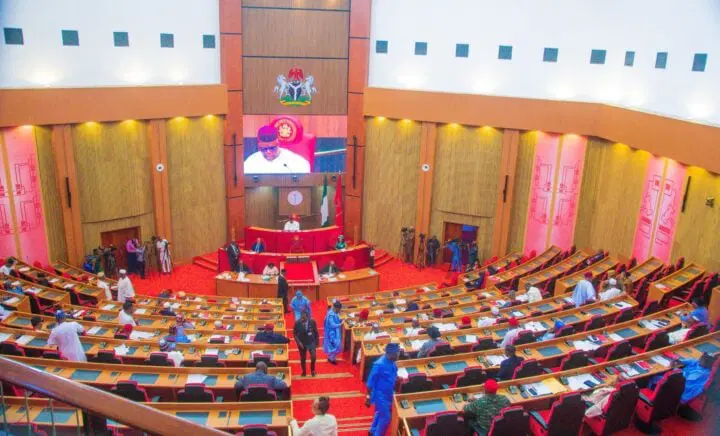
FAME Foundation commends the Nigerian Senate for approving a penalty of up to 14 years imprisonment, with a minimum sentence of five years and no option of fine, for educators convicted of sexually harassing students in tertiary institutions across Nigeria.
The upper chamber passed the Sexual Harassment of Students (Prevention and Prohibition) Bill, 2025 (HB.1597), after it scaled its third reading on Wednesday. The bill, presented for concurrence by the Senate Leader, Senator Opeyemi Bamidele (APC, Ekiti Central), seeks to protect Nigerian students from all forms of sexual misconduct in academic environments by providing a legal framework for enforcement and punishment. It also aims to uphold ethical standards and safeguard the fiduciary relationship of trust between educators and students in Nigerian tertiary institutions.
Under the bill, offences under Clauses 4(1), (2), and (3) carry imprisonment of up to 14 years but not less than five years, without an option of fine, while offences under Clauses 4(4), (5), and (6) attract imprisonment of up to five years but not less than two years, also without an option of fine.
The bill defines acts constituting sexual harassment by an educator to include having or demanding sexual intercourse with a student, intimidation through sexual advances, unwanted touching or hugging, sending sexually explicit pictures, videos, or objects, making sexual jokes or comments about a student’s body, and stalking. It further specifies that a student’s consent is not a defense, intent is not required to be proven for conviction, and the only valid defense is where the educator and the student are legally married.
The legislation also affirms the right of students to pursue civil action against educators for breach of fiduciary duty. Once criminal proceedings are initiated, educational institutions are prohibited from conducting parallel disciplinary processes until the court proceedings conclude. Each Nigerian tertiary institution is required to establish an Independent Sexual Harassment Prohibition Committee to investigate and decide on complaints in accordance with the bill, and such decisions will supersede existing internal policies.
A sexual harassment complaint may be filed by the affected student, a representative such as a relative, guardian, or lawyer, or any individual with an interest in the student’s welfare. Complaints may be submitted to the Nigeria Police Force or the Attorney General, with copies forwarded to the institution’s Independent Sexual Harassment Prohibition Committee.
During the plenary, Senator Adams Oshiomhole (APC, Edo North) called for the bill to extend beyond educational institutions, noting that sexual harassment also occurs in workplaces and other environments. Deputy Senate President Barau Jibrin (APC, Kano North), who presided over the session, clarified that since the legislation originated from the House of Representatives, the Senate could only amend, not overhaul it. He added that existing Nigerian laws already address harassment in workplaces and public institutions.
Following deliberations, the Senate approved the bill, moving it closer to becoming law as it awaits presidential assent.
FAME Foundation recognises this legislative development as a big milestone in addressing sexual and gender-based violence in Nigeria’s educational sector. We commend the Senate’s action and reiterate our commitment to working with stakeholders to promote awareness, prevention, and accountability, ensuring safe and inclusive learning environments for all Nigerian students.