
Contact Us:
Plot 253, off Defense Quarters, Garki Area 1, Durumi 1, Abuja.
Landmark: The Apostolic Church, Area 1. Federal Capital Territory.
Tel: +2349070051404
Email: info@famefoundationwg.org
A Not-Profitable Organisation set up to formulate programmes through several initiatives to mentor, empower and advocate for women and girls.
FAME foundation was established to solicit, encourage and advance the social, emotional and economic wellbeing of women and girls as well as formulate programmes within the framework of national development plan with a view to enhancing the participation of women and advocate for gender parity in the society. FAME foundation firmly believe that the entire nation, businesses, communities and groups can benefit from the implementation of programs and policies that adopt the notion of women empowerment.
 April 8, 2026
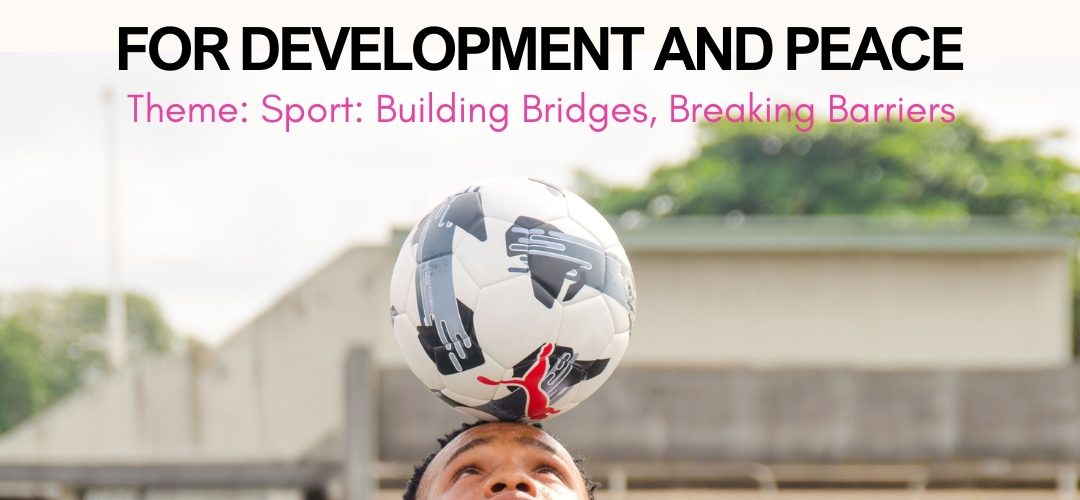
FAME Foundation joins the global community to commemorate the International Day of Sport for Development and Peace, celebrated annually on April 6. This year’s theme, “Sport: Building Bridges, Breaking Barriers,” highlights sport’s unique power to unite people across divides and challenge social, cultural, and economic obstacles that often limit access and opportunity, especially for women, girls, and underserved communities.
The International Day of Sport for Development and Peace serves as a global call to recognize and harness the role of sport in driving social change, promoting inclusion, and fostering peace. It is a reminder that sport is not just a form of recreation, but a powerful tool that can influence lives, shape perspectives, and create opportunities where they are often limited.
At a time when inequalities remain evident, the day serves as a reminder that sport can create common ground, foster understanding, and open up opportunities for those who are often left out.
Speaking to the press, Arabinrin Aderonke Atoyebi, Executive Director, FAME Foundation, described the 2026 theme as both a reflection of ongoing realities and a call to take deliberate action;
“The theme ‘Building Bridges, Breaking Barriers’ speaks directly to the work that needs to be done. It is not enough to acknowledge that barriers exist, we must be intentional about removing them. Sport gives us a platform to do this in a way that is visible, relatable, and impactful.”
She noted that sport has the ability to create connections across social divides, bringing together individuals from different communities, backgrounds, and experiences in a way that fosters understanding and unity;
“When people come together through sport, they begin to see each other beyond stereotypes and limitations. It creates a sense of belonging and shared identity, which is essential in building stronger, more inclusive communities.”
She further explained that while sport holds this power, access to it is still not equal, particularly for women and girls who continue to face structural and societal barriers that limit their participation;
“Many women and girls are still excluded from sport, not because they lack interest or ability, but because of the systems and perceptions that restrict their involvement. Breaking these barriers requires intentional effort, consistent advocacy, and the creation of safe and inclusive spaces.”
She emphasized that the 2026 theme aligns strongly with FAME Foundation’s mission of using sport as a tool for development, inclusion, and empowerment;
“At FAME Foundation, we are committed to using sport as a means of creating opportunity. Our programs are designed to ensure that women, girls, and children are not only included, but actively engaged, supported, and given the space to thrive.”
One of the key platforms driving this work is the PLAY it DREAM it initiative, which uses sport as an entry point to engage young people while equipping them with essential life skills and exposing them to opportunities that support their personal growth and development.
“PLAY it DREAM it reflects our belief that sport can shape futures. It goes beyond participation and focuses on development, building confidence, leadership, resilience, and a sense of purpose in young people. When these values are nurtured, young people are better equipped to navigate challenges and create pathways for themselves.”
Over the years, FAME Foundation has implemented a range of sport-based programs and activities that bring together individuals from diverse social and economic backgrounds. These initiatives have created platforms for interaction, learning, and collaboration, reinforcing the idea that sport can serve as a bridge between different groups while promoting inclusion and unity.
Beyond participation, the organization continues to integrate key elements such as life skills development, mentorship, health awareness, and advocacy into its programs, ensuring that sport becomes a holistic tool for development rather than just a recreational activity.
She stated;
“Sport creates entry points for conversations that matter. It allows us to engage young people on issues that affect their lives, from confidence and self-worth to health and wellbeing. This is how we begin to break deeper barriers that exist beyond the surface.”
She also highlighted the importance of partnerships and collective responsibility in advancing the role of sport as a tool for development and peace;
“Building bridges requires collaboration. Governments, organizations, communities, and stakeholders all have a role to play in ensuring that sport is accessible, inclusive, and impactful. When we work together, the reach and impact of sport can be significantly expanded.”
She concluded by emphasizing that the message of the day must translate into sustained action beyond April 6;
“Building bridges and breaking barriers must go beyond a single day of recognition. It must be reflected in our policies, our programs, and our everyday actions. Sport can drive development and build a more peaceful world, but this will only happen when inclusion is intentional, consistent, and prioritized.”