
Contact Us:
House 3, Gloriana Gardens Estate, NUT road, Sabon Lugbe, Abuja, Nigeria
Landmark: National Union of Teachers (NUT), Sabon Lugbe.
Tel: +2349070051404
Email: info@famefoundationwg.org
A Not-Profitable Organisation set up to formulate programmes through several initiatives to mentor, empower and advocate for women and girls.
FAME foundation was established to solicit, encourage and advance the social, emotional and economic wellbeing of women and girls as well as formulate programmes within the framework of national development plan with a view to enhancing the participation of women and advocate for gender parity in the society. FAME foundation firmly believe that the entire nation, businesses, communities and groups can benefit from the implementation of programs and policies that adopt the notion of women empowerment.
 July 31, 2026
July 30, 2026, marked World Day Against Trafficking in Persons, a global observance established by the United Nations to raise awareness about human trafficking and strengthen efforts to prevent exploitation, protect victims and bring traffickers to justice.
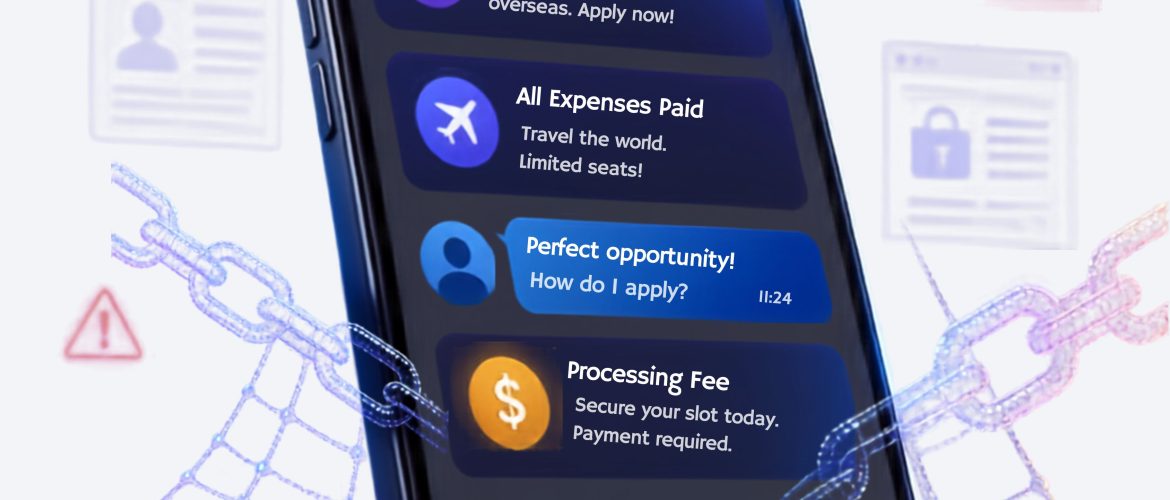
The 2026 theme, “Trapped Behind the Scam,” draws attention to the growing connection between human trafficking and online scams, highlighting how digital platforms, fraudulent job offers and deceptive recruitment are increasingly being used to lure and exploit vulnerable people.
Although the day was proclaimed by the United Nations in 2013, it was first observed in 2014, providing a global platform for governments, civil society organisations, communities and individuals to strengthen collective action against trafficking in persons.
Trafficking in persons involves the recruitment, transportation, transfer, harbouring or receipt of people through means such as deception, force or coercion for the purpose of exploitation. This exploitation can include forced labour, sexual exploitation, slavery-like practices, servitude and, in some cases, the removal of organs.
In simple terms, human trafficking is a serious violation of human rights in which people are deceived, threatened or forced into situations where they are exploited for another person’s benefit, often under conditions that make it difficult or dangerous for them to escape.
Trafficking can take many forms. People may be recruited through fake job advertisements, fraudulent employment agencies, promises of travel or offers of better opportunities abroad. Some victims are transported across borders and forced into sexual exploitation or labour, while others are increasingly being taken to scam compounds and forced to participate in online fraud through threats, violence and intimidation.
In Nigeria, human trafficking is driven by a combination of social and economic vulnerabilities. Poverty, unemployment and limited economic opportunities can push people, particularly young people, to search for better opportunities and make them more susceptible to traffickers who offer false promises of employment, travel, education or a better life abroad.
Pressure to support families financially, limited access to education, insecurity and displacement in some parts of the country, as well as gender inequality affecting women and girls, can further increase vulnerability.
The growing use of digital platforms has also introduced new pathways into trafficking. Social media, messaging platforms and online job advertisements can allow traffickers to reach potential victims directly, making recruitment less visible and sometimes more difficult to identify.
A recent report in Daily Trust highlighted concerns that young Nigerians are increasingly being lured through fake job offers and social media, demonstrating how an opportunity that appears legitimate can become the starting point for exploitation.
The problem is not limited to online recruitment. Recent cases reported across Nigeria and involving Nigerians abroad show that traditional forms of trafficking remain a serious concern.
In July 2026, three Nigerian women were reportedly rescued from traffickers in Mali after being taken there under circumstances linked to promises of opportunities. The case reflects a pattern in which women are lured across borders with expectations of employment or a better life and subsequently exposed to exploitation.
Trafficked Nigerian girls have also recently shared accounts of forced prostitution, highlighting the continuing sexual exploitation of women and girls. Reports of these experiences demonstrate the devastating consequences trafficking can have long after the initial recruitment.
Child trafficking remains another critical concern. In Niger State, police recently arrested two suspected child traffickers and rescued nine children during separate operations. According to reports, one suspect allegedly expected to receive a monthly commission for each child, illustrating how children can become part of organised exploitation networks.
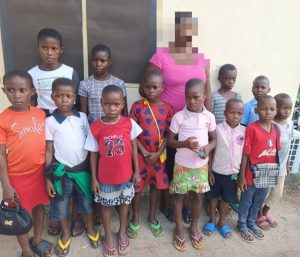
These cases show that trafficking in Nigeria is not one single problem. It can involve women being trafficked across borders for sexual exploitation, children being moved or sold for profit, and young people being recruited through seemingly legitimate online opportunities.
One of the most concerning developments is the changing way victims are recruited.
For many people, trafficking does not begin with an obvious threat. It can begin with a message on social media, a job advertisement, an invitation to travel or a promise of a better income.
The danger becomes even greater when people are recruited for opportunities outside Nigeria. A person may believe they are travelling for legitimate employment, only to discover that the promised job does not exist and that leaving the situation is not as easy as expected.
Recent reporting on Nigerians trafficked to Mali has shown how promises of legitimate work can lead to sexual exploitation and abuse. Survivors have spoken about the reality they encountered after being recruited with expectations of employment.

The emergence of online scam compounds adds another dimension. According to recent international reporting, victims from numerous countries are being lured through fake employment opportunities advertised on social media and subsequently exploited in scam centres.
This is why the 2026 theme, “Trapped Behind the Scam,” is particularly relevant. The person behind an online scam may not always be a willing participant. In some cases, that person may themselves be a victim of trafficking and coercion.
The recent cases reported in Nigeria make one thing clear: preventing trafficking requires more than awareness campaigns once a year.
Young people need better access to accurate information about recruitment risks and the ability to verify job offers before travelling or handing over personal documents. Online safety and digital literacy should form part of trafficking prevention, particularly as traffickers increasingly use digital platforms to identify and approach potential victims.
Families and communities also have an important role to play in recognising warning signs and questioning recruitment offers that appear unusually attractive or cannot be independently verified.
At the same time, victims and survivors need more than rescue. They need access to safe accommodation, healthcare, psychosocial support, legal assistance, education, skills development and economic opportunities that can help them rebuild their lives without returning to situations of vulnerability.
The response must also recognise that women, girls and children can face particular forms of exploitation. Recent reports involving Nigerian women trafficked to Mali, girls subjected to forced prostitution and children rescued from suspected traffickers demonstrate why prevention and protection must remain gender- and child-sensitive.
Technology must also become part of the solution. Digital platforms can be used not only for recruitment by traffickers but also for prevention, public education, reporting and connecting vulnerable people with legitimate support.
World Day Against Trafficking in Persons may be observed on July 30, but the fight against trafficking cannot be limited to one day.
The stories emerging from Nigeria remind us that trafficking can happen across borders, within communities and increasingly through digital spaces. It can begin with a promise of employment, a journey abroad, a social media message or an opportunity that appears to offer a way out of financial hardship.
Behind every statistic is a person whose freedom, dignity and future have been threatened.
As Nigeria and the global community reflect on the 2026 theme, “Trapped Behind the Scam,” the responsibility is to recognise these changing forms of exploitation, strengthen prevention, protect those at risk, support survivors and ensure that opportunities for a better life do not become pathways into exploitation.
Trafficking thrives where vulnerability is exploited and silence is allowed to persist. Ending it requires vigilance, accountability and collective action.