
Contact Us:
House 3, Gloriana Gardens Estate, NUT road, Sabon Lugbe, Abuja, Nigeria
Landmark: National Union of Teachers (NUT), Sabon Lugbe.
Tel: +2349070051404
Email: info@famefoundationwg.org
A Not-Profitable Organisation set up to formulate programmes through several initiatives to mentor, empower and advocate for women and girls.
FAME foundation was established to solicit, encourage and advance the social, emotional and economic wellbeing of women and girls as well as formulate programmes within the framework of national development plan with a view to enhancing the participation of women and advocate for gender parity in the society. FAME foundation firmly believe that the entire nation, businesses, communities and groups can benefit from the implementation of programs and policies that adopt the notion of women empowerment.
 September 2, 2026
The Jigawa State Government and the Women Farmers Advancement Network (WOFAN) have renewed their commitment to deepen collaboration on agricultural transformation, food security and the economic inclusion of women, young people and persons with disabilities (PWDs).
The partnership is expected to scale interventions under the WOFAN-ICON2 Project and expand opportunities for smallholder farmers, processors and rural agribusinesses across Jigawa State.
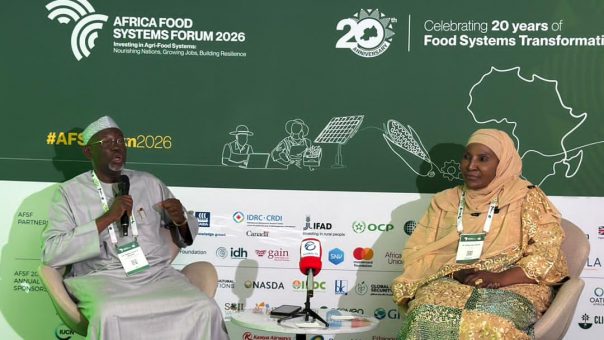
Governor Umar Namadi and WOFAN Founder and Global Advocate Dr Salamatu Garba made these remarks during a joint media interview on the sidelines of the Africa Food Systems Forum (AFSF) in Kigali, Rwanda.
Namadi said Jigawa had recorded significant gains from lessons and partnerships developed through its previous participation in the forum, including the establishment of the Jigawa State Agricultural Transformation Agency to provide a dedicated institutional platform for driving agricultural development.
He said the network has become one of the major drivers of the state’s agricultural transformation agenda.
The governor commended WOFAN’s interventions targeting women, young people and persons with disabilities, assuring the organisation of the state government’s commitment to addressing challenges that could hinder the expansion of its programmes.
He described the WOFAN-ICON2 model as an initiative that “every serious government needs to work with and replicate,” stressing that stronger collaboration could improve livelihoods, create economic opportunities and contribute to food security.
Namadi said WOFAN’s interventions aligned with Jigawa’s agricultural transformation and food-security priorities, as well as the 2026 AFSF’s focus on innovative agribusiness investment models.
Garba, in her remarks, described Jigawa as one of WOFAN’s frontline states, noting that the enabling environment created by the state government had contributed to the success of farmers participating in the organisation’s programmes.
She said WOFAN currently works with about 150 women’s clusters and 50 groups of 30 members each in the state, while nearly 10,000 farmers have opened bank accounts through its financial inclusion programme.
She noted that the programme particularly targets women, persons with disabilities, low-income farm labourers, loaders, processors and other actors across agricultural value chains.
Garba disclosed that participating farmers collectively saved about ₦27 million from their post-harvest proceeds, which WOFAN matched to enable them to acquire a multi-crop harvester.
She said the equipment is now serving members of the WOFAN network and surrounding farming communities, helping farmers improve the quality of paddy produced and making their produce more attractive to off-takers.
Garba further disclosed that WOFAN off-took about 54,000 bags of processed rice from Sara Market in Jigawa during the last farming season at premium prices.
She described the experience of Jigawa farmers as an example of what could be achieved through education, financial inclusion, access to appropriate technology and an enabling environment.
The WOFAN founder said the organisation plans to expand its engagement with women processors and agro-marketers in the state, including providing training and capital support to about 100 rural youth-led start-ups in the coming year.
Responding to questions on the state’s efforts to improve farm productivity, Namadi said Jigawa currently has about 1,700 extension workers supporting farmers.
He added that the state had undertaken a soil survey to provide farmers with information to guide decisions on suitable crops, fertiliser application and appropriate farming practices.
Namadi and Garba stressed the importance of government-development partner collaboration, knowledge sharing, financial inclusion and investment in agricultural technologies in accelerating agricultural transformation and strengthening Nigeria’s food-security agenda.
Source: THE NATION