
Contact Us:
House 3, Gloriana Gardens Estate, NUT road, Sabon Lugbe, Abuja, Nigeria
Landmark: National Union of Teachers (NUT), Sabon Lugbe.
Tel: +2349070051404
Email: info@famefoundationwg.org
A Not-Profitable Organisation set up to formulate programmes through several initiatives to mentor, empower and advocate for women and girls.
FAME foundation was established to solicit, encourage and advance the social, emotional and economic wellbeing of women and girls as well as formulate programmes within the framework of national development plan with a view to enhancing the participation of women and advocate for gender parity in the society. FAME foundation firmly believe that the entire nation, businesses, communities and groups can benefit from the implementation of programs and policies that adopt the notion of women empowerment.
 October 15, 2026
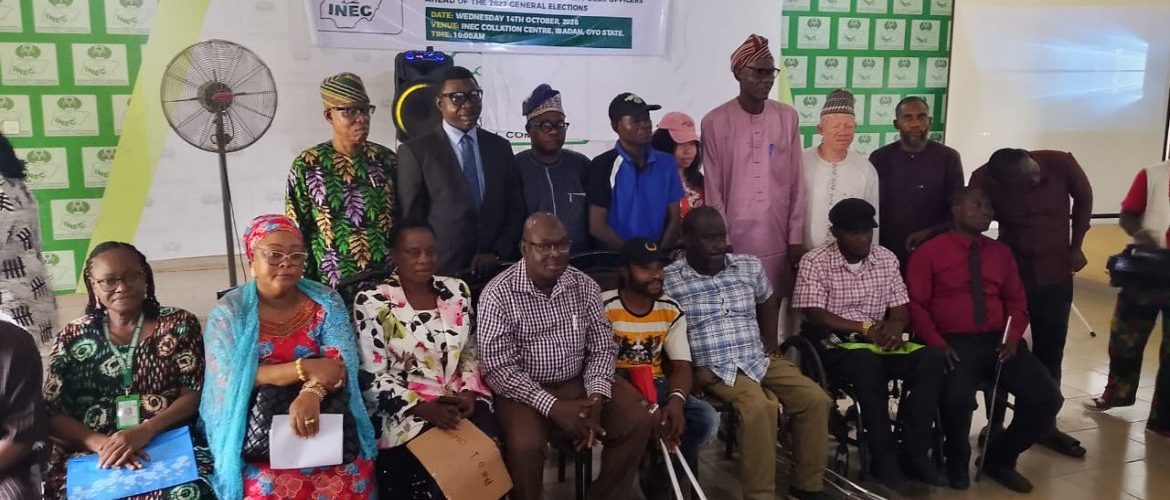
The Independent National Electoral Commission (INEC) in Oyo State has trained persons with disabilities on electoral participation and the use of inclusive interventions ahead of the 2027 general elections.
The training, held on Wednesday at the state collation centre, INEC office, Ibadan, was organised to improve electoral awareness among persons with disabilities, strengthen their understanding of voting procedures and address barriers that could limit their participation in the electoral process.
Speaking at the event, the Resident Electoral Commissioner (REC) in Oyo State, Prof. Rahmon Adeniran Tella, represented by Mrs Agnes Abosede Oluwatomisin, said the commission remained committed to ensuring that eligible citizens with disabilities could exercise their civic rights without avoidable obstacles.
He said electoral inclusion went beyond allowing persons with disabilities to register and vote, stressing the need to provide accessible electoral information, facilitate access to polling units and encourage their participation in voter education, election observation and other lawful electoral activities.
Tella said INEC would provide assistive devices, including magnifying glasses, Braille ballot guides and written instruction posters for voters with hearing impairments, to improve their voting experience.
He added that persons with disabilities, alongside elderly people, pregnant women and nursing mothers, were entitled to priority consideration at polling units, in line with the commission’s guidelines.
The REC also said INEC would continue to engage qualified persons with disabilities as ad hoc election personnel, noting that such measures would promote a more inclusive electoral process.
He identified inaccessible polling units, communication barriers, transportation difficulties, inadequate electoral information in accessible formats and negative societal attitudes as some of the challenges requiring collective action.
The commission, he said, was also distributing the first batch of 77,015 newly printed Permanent Voter Cards (PVCs) across 351 registration areas in the state.
According to him, the distribution exercise began on October 9 and was expected to end on October 15, before continuing at the local government level from October 16.
In her address, the Deputy Director of INEC’s Gender and Inclusivity Department, Mrs Habiba Jatto, said the workshop was designed to strengthen stakeholders’ understanding of disability inclusion, accessibility and the effective deployment of the commission’s interventions.
She said the participation of persons with disabilities as voters, candidates and election personnel was central to an inclusive democracy, adding that the commission’s efforts were guided by relevant electoral and disability inclusion frameworks.
Jatto listed the workshop’s objectives to include improving accessible voter education, strengthening collaboration with disability organisations, building capacity for the effective use of assistive devices and identifying gaps from previous elections ahead of the 2027 polls.
She emphasised that providing assistive materials alone was insufficient without proper deployment, coordination, monitoring and awareness among the intended beneficiaries.
In her goodwill message, the Head of the Civic Values and Democratic Department of the National Orientation Agency (NOA), Mrs Simbiat Akande, representing the agency’s Director, Mallam Isah, called for effective disability inclusion and accessibility in Nigeria’s electoral process.
She said the workshop aimed to raise awareness of the electoral rights of persons with disabilities and address physical, communication and procedural barriers limiting their participation as voters and candidates.
Akande stressed the need for accessible electoral facilities, effective interventions and sustained public education to protect the rights of persons with disabilities and promote their full participation in the democratic process.
Also speaking, the Oyo State Chairman of the Joint National Association of Persons with Disabilities (JONAPWD), Mr Abiodun Kolawole, commended INEC for organising the training but appealed for stronger collaboration between the commission and the disability community.
Kolawole said the association had previously written to request a courtesy visit to the REC’s office but was yet to receive a response. He urged the commission to consider the request to strengthen engagement and cooperation.
He also called for fair consideration of persons with disabilities for election observer and ad hoc staff positions during the 2027 general elections, in accordance with INEC’s recruitment guidelines.
Kolawole further urged the commission to ensure that polling units were accessible and that voters with disabilities could participate in elections safely, freely and independently.
In an interview, he expressed satisfaction that persons with disabilities were being included in preparations for the elections, adding that the training would help them understand voting regulations and participate more effectively in the electoral process.
The participants were encouraged to share the knowledge gained with their communities and disability groups to improve awareness and ensure that eligible voters with disabilities were not left behind in the 2027 general elections.
Source: INDEPENDENT