
Contact Us:
House 3, Gloriana Gardens Estate, NUT road, Sabon Lugbe, Abuja, Nigeria
Landmark: National Union of Teachers (NUT), Sabon Lugbe.
Tel: +2349070051404
Email: info@famefoundationwg.org
A Not-Profitable Organisation set up to formulate programmes through several initiatives to mentor, empower and advocate for women and girls.
FAME foundation was established to solicit, encourage and advance the social, emotional and economic wellbeing of women and girls as well as formulate programmes within the framework of national development plan with a view to enhancing the participation of women and advocate for gender parity in the society. FAME foundation firmly believe that the entire nation, businesses, communities and groups can benefit from the implementation of programs and policies that adopt the notion of women empowerment.
 March 18, 2026
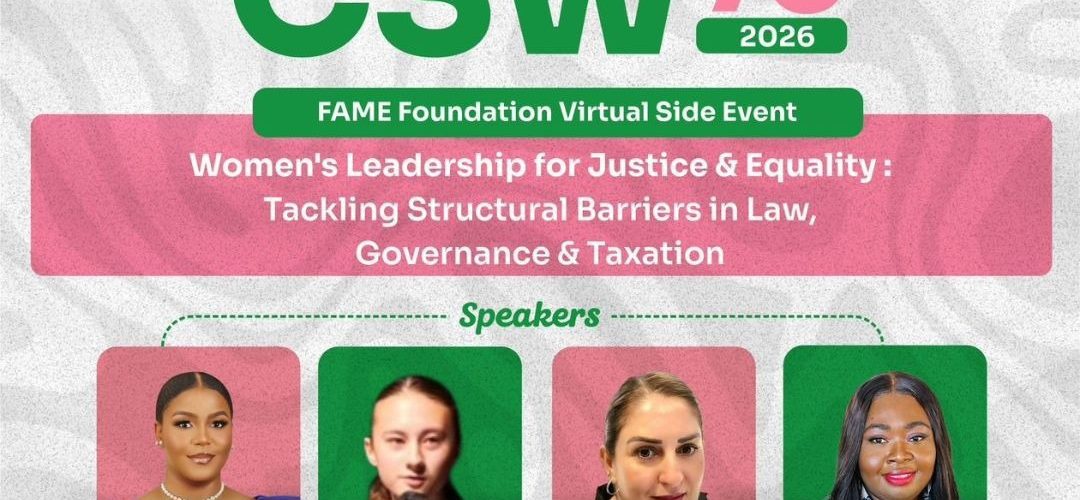
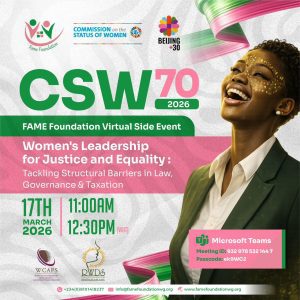
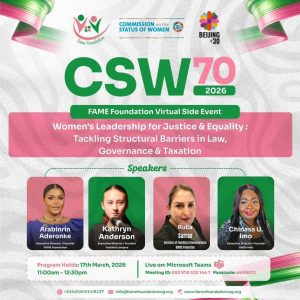
On 17th March 2026, FAME Foundation hosted a virtual event as a side event for the Commission on the Status of Women (CSW 70), titled Women’s Leadership for Justice and Equity: Tackling Structural Barriers in Law, Governance, and Taxation.
The session brought together four distinguished speakers: Rulla Sarras, Director of Funding and Development at RWDS – Palestine; Chinasa U. Imo, Executive Director and Founder of SieDi-Hub; Arabinrin Aderonke, Executive Director and Founder of FAME Foundation; and Kathryn Anderson, Executive Director and Founder of Youthful Lawyers.
The session aimed to explore the structural barriers women face in law, governance, and taxation, while highlighting strategies to advance women’s leadership.
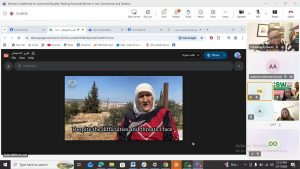
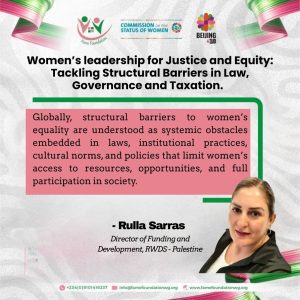
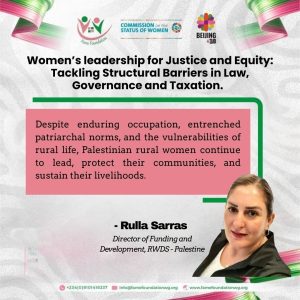
The session opened with the first speaker, Rulla Sarras, who presented on the resilience of Palestinian women and farmers navigating life under conflict and the encroachment of settlers. Her presentation emphasized the challenges these women face under patriarchy, as well as the actions they take to protect their families and maintain their farmland. To further illustrate these realities, Dr. Rulla shared an inspiring video highlighting the struggles and strength of Palestinian women, which can be viewed in the link below:
https://drive.google.com/file/d/1PaV0uvv2xM0IKF0BhMjhXv66TbbMfSTf/view
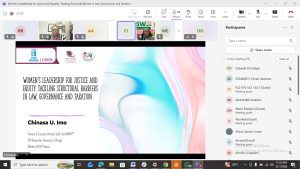
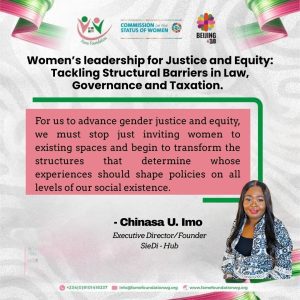
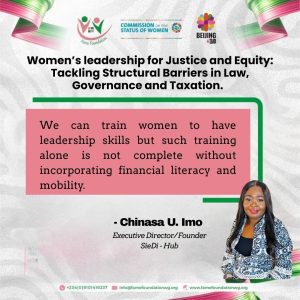
The second speaker, Chinasa Imo, explored the simultaneous barriers women encounter in leadership roles. She shared insights from her organization, SieDi-Hub, including research findings, empowerment initiatives, and support programs designed to help women overcome structural obstacles. Her presentation emphasized the importance of sustained advocacy and practical interventions to ensure women can thrive in positions of leadership.
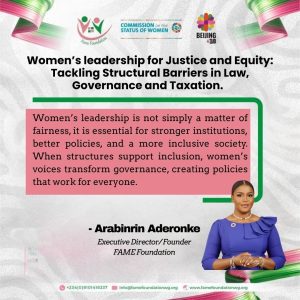
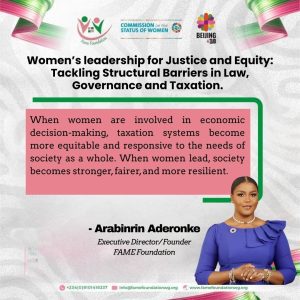
The third speaker, Arabinrin Aderonke, addressed critical issues surrounding women’s representation in governance. She highlighted examples of countries with high levels of female inclusion, such as Rwanda (63%), Nicaragua (57%), and Cuba (55%), explaining the substantial benefits these nations experience when women are institutionally represented. Drawing on real-world examples, including the experiences of Senator Natasha Apkoti, she emphasized that increasing women’s representation in parliament and governance structures can mitigate the challenges women face under patriarchal systems.
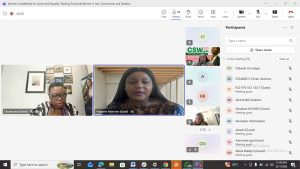
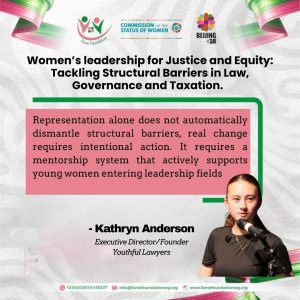
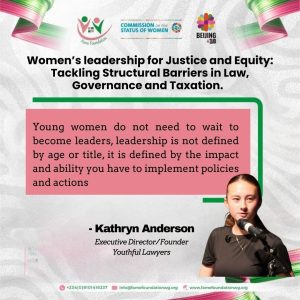
The final speaker, Kathryn Anderson, wove together the perspectives shared during the session, emphasizing the role of education, mentorship, and active participation in policy-making to strengthen women’s leadership. She highlighted how young women can leverage legal experience to achieve societal impact, reinforcing the broader role of women’s leadership in promoting justice, equity, and sustainable development.
Participants actively engaged with the speakers, reflecting on the insights shared and expressing appreciation for the session. Patience from England praised Dr. Rulla for highlighting the experiences of Palestinian women farmers and expressed her commitment to learning more to better advocate for women’s issues. She reflected on the experiences shared by Arabinrin Aderonke about Senator Natasha Apkoti, questioning progress in Nigeria and recognizing the work still required to advance women’s leadership.
Amaka from the United Kingdom also echoed these sentiments, highlighting the importance of mentorship, collaboration, and financial support for women navigating patriarchal systems. Together, these reflections reinforced the event’s message: resilience, collective action, and support are essential in dismantling structural barriers and promoting equity.
Several key takeaways emerged from the session. The determination and resilience of women in protecting property and sustaining farmland under extreme adversity underscore the strength and resourcefulness of women in maintaining livelihoods. Women continue to face multiple, overlapping barriers in leadership roles, and greater representation in governance enhances equitable decision-making and institutional strength.
Our United Nations CSW70 Side event successfully achieved its objectives by promoting meaningful dialogue, sharing different perspectives, and highlighting practical strategies to advance women’s leadership.
Attendees left the session inspired, equipped with knowledge, and empowered with advocacy tools to drive equity and justice in their spheres, reaffirming the transformative potential of women’s leadership in law, governance, and taxation.
Watch the full session here: