
Contact Us:
House 3, Gloriana Gardens Estate, NUT road, Sabon Lugbe, Abuja, Nigeria
Landmark: National Union of Teachers (NUT), Sabon Lugbe.
Tel: +2349070051404
Email: info@famefoundationwg.org
A Not-Profitable Organisation set up to formulate programmes through several initiatives to mentor, empower and advocate for women and girls.
FAME foundation was established to solicit, encourage and advance the social, emotional and economic wellbeing of women and girls as well as formulate programmes within the framework of national development plan with a view to enhancing the participation of women and advocate for gender parity in the society. FAME foundation firmly believe that the entire nation, businesses, communities and groups can benefit from the implementation of programs and policies that adopt the notion of women empowerment.
 September 14, 2026
Nigeria has a rape problem, and it is getting worse, not better.
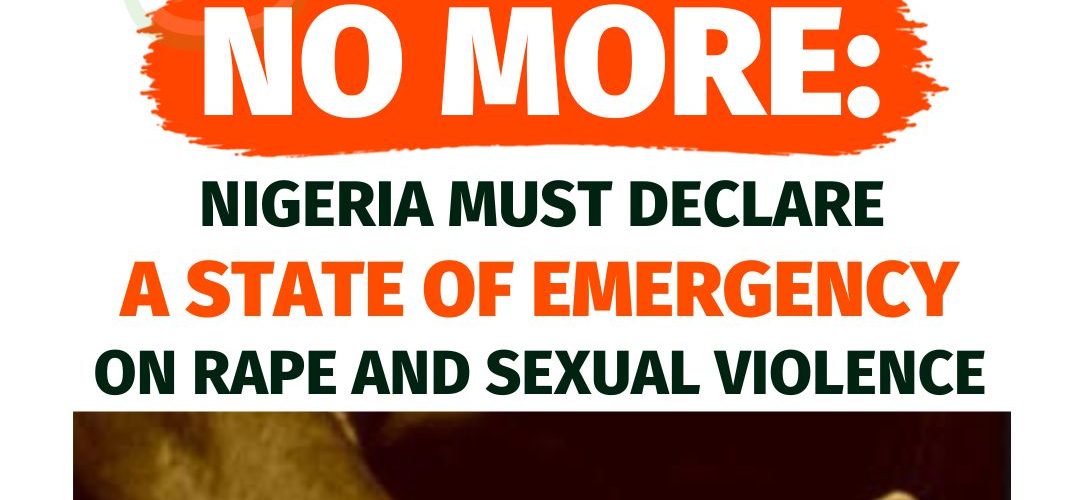
FAME Foundation for Girls and Women Empowerment is calling on the Federal Government of Nigeria to declare a renewed State of Emergency on rape and sexual violence and back the declaration with clear targets, funding, measurable timelines and consequences for institutional failure.
Nigeria cannot continue to respond to sexual violence as though it were an isolated social problem. The available evidence points to a national crisis in which women and girls continue to experience violence while too many survivors struggle to access justice, medical care, psychosocial support and protection.
Between January and April 2026, the Federal Ministry of Women Affairs documented 2,755 cases of gender-based violence and intimate partner violence across the country, an average of about 23 reported cases every day. Women and girls accounted for more than 81 percent of documented survivors, while sexual violence constituted 82 percent of the reported cases, with adolescent girls aged 10 to 14 particularly affected. Most concerning, only 4 percent of the formally reported cases resulted in successful prosecution.
The figures from the National Agency for the Prohibition of Trafficking in Persons (NAPTIP) tell a similar story. Between January and July 2026, NAPTIP recorded 756 sexual and gender-based violence cases. Of these, 549 were investigated, 64 arrests were made and only two cases were successfully concluded in court.
The crisis is not limited to reported cases. The 2024 Nigeria Demographic and Health Survey found that 21 percent of women aged 15 to 49 had experienced physical or sexual violence. Yet only 24 percent of women who had experienced physical or sexual violence sought help to stop the violence, while 58 percent neither sought help nor told anyone. This means official case figures capture only a fraction of the violence taking place across the country.
Six years after the emergency declaration, the question is: what has changed?
In June 2020, all 36 state governors declared a State of Emergency on rape and sexual and gender-based violence following widespread outrage over cases of rape and killings of women and girls. The declaration was accompanied by commitments to strengthen legislation, establish sex offender registers and improve the response to sexual violence. The Federal Government also supported the establishment of an inter-ministerial Presidential Task Force on Sexual and Gender-Based Violence.
Six years later, Nigeria is still confronting the same fundamental problems: underreporting, weak investigations, delays in prosecution, inadequate survivor support and limited accountability for perpetrators.
There has been progress in the legal framework. Federal reporting indicates that 32 of Nigeria’s 36 states had adopted the Violence Against Persons (Prohibition) Act, with efforts continuing in the remaining states. However, adoption of a law is not the same as implementation. The challenge now is to ensure that laws translate into accessible protection, effective investigations, timely trials and justice for survivors.
The gap is also evident in survivor support services. As of November 2025, the Federal Government reported that Nigeria had 50 Sexual Assault Referral Centres across 24 states, supporting more than 58,000 survivors. While this represents progress, it remains insufficient for a country of Nigeria’s size and population.
FAME Foundation therefore believes that Nigeria needs more than another symbolic declaration. A renewed State of Emergency must be an emergency of action.
FAME Foundation calls for:
FAME Foundation recognises the efforts of government institutions, civil society organisations, development partners and survivor advocates working to address sexual and gender-based violence in Nigeria. However, the scale of the crisis requires a response that is equally urgent, coordinated and measurable.
We cannot continue to declare emergencies without building the systems required to end them.
Nigeria’s women and girls deserve more than promises. Survivors deserve justice. Children deserve protection. And perpetrators must know that rape and sexual violence will be investigated, prosecuted and punished.
FAME Foundation is ready to work with the Federal Government, state governments, justice sector institutions, civil society, development partners and communities to turn this State of Emergency into measurable action and lasting protection for women and girls across Nigeria.