
Contact Us:
House 3, Gloriana Gardens Estate, NUT road, Sabon Lugbe, Abuja, Nigeria
Landmark: National Union of Teachers (NUT), Sabon Lugbe.
Tel: +2349070051404
Email: info@famefoundationwg.org
A Not-Profitable Organisation set up to formulate programmes through several initiatives to mentor, empower and advocate for women and girls.
FAME foundation was established to solicit, encourage and advance the social, emotional and economic wellbeing of women and girls as well as formulate programmes within the framework of national development plan with a view to enhancing the participation of women and advocate for gender parity in the society. FAME foundation firmly believe that the entire nation, businesses, communities and groups can benefit from the implementation of programs and policies that adopt the notion of women empowerment.
 September 15, 2026
Every year, when the rains come to Nigeria, so does flooding. Roads disappear under water. Cars get stuck. Homes fill up with mud and dirty water. Families lose everything they own in a single night.
This has been happening for years, and 2026 is turning out to be another hard year, with Nigeria’s own capital city, Abuja, now feeling it too.
In August 2026, heavy rain hit Abuja and caused serious flooding in places many people never expected: Wuse 2, Katampe, Maitama, Asokoro, Gwarinpa, Utako, Guzape, Lokogoma, Garki, Nyanya, Gudu, and more. Cars were swallowed by floodwater. People got stranded on the road. Water rushed into homes and offices in some of the city’s most well-known neighbourhoods.
One report described it as: “We have not seen anything like this before.” For a city that many Nigerians think of as safer and better planned than places like Lagos, that came as a shock.
So, why did it happen? A few reasons kept coming up:
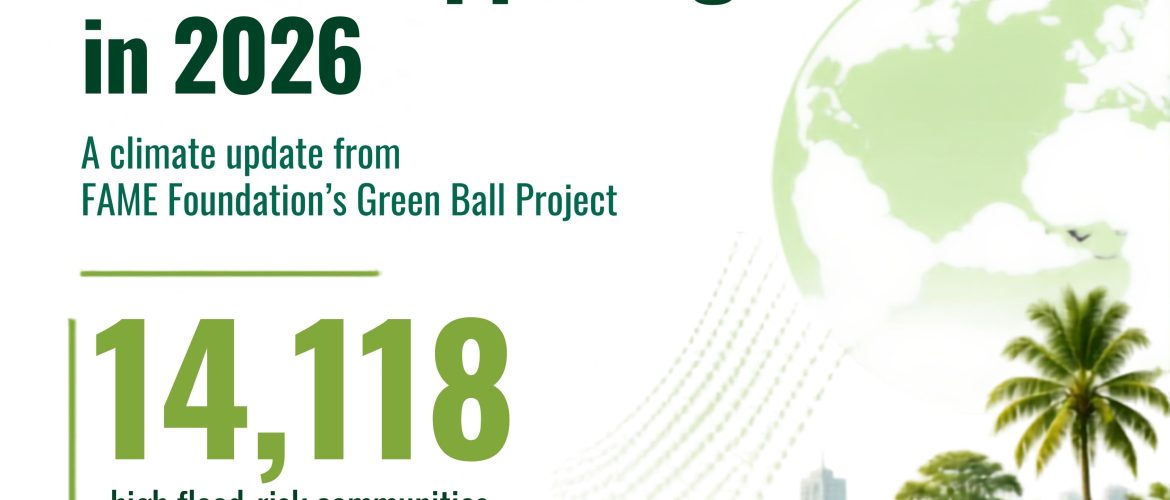
Before Abuja flooded, Nigeria’s flood forecasters had already been warning that this would be a rough year. Back in April, the government said 33 states plus Abuja were at risk of flooding in 2026, with over 14,000 communities flagged as high-risk. Officials said the worst of it would likely hit between July and September.
That warning has already come true in several places:
It usually comes down to a mix of things:
Flooding in Nigeria is not just an inconvenience. It’s genuinely deadly:
After the water goes down, the suffering often continues: outbreaks of cholera, typhoid, and malaria in crowded displacement camps, ruined farmland, and rising food prices. Women, children, and poorer families are usually hit the hardest.
Nigeria already knows the floods are coming; the warnings are published months in advance. The problem is what happens between the warning and the disaster. Drains stay blocked. Waste keeps getting dumped in waterways. Green spaces keep disappearing. And when the rain finally comes, it’s too late to fix any of it.
This is exactly where community action matters. Through the Greenball Project, FAME Foundation is working to help close that gap: supporting drain clean-ups, protecting green spaces, spreading flood-season awareness in communities before the rain hits, and pushing for the kind of long-term investment that keeps a heavy rainstorm from turning into a tragedy.
Climate change didn’t invent Nigeria’s flooding problem, but it’s making it worse every year. The good news is that most of what turns rain into disaster (blocked drains, lost green space, and poor planning) is something we can actually change, together.
Sources
Figures and reports referenced from NIHSA, Nigeria’s Federal Ministry of Water Resources and Sanitation, the Federal Ministry of Environment, and Nigerian news coverage, 2026.