
Contact Us:
House 3, Gloriana Gardens Estate, NUT road, Sabon Lugbe, Abuja, Nigeria
Landmark: National Union of Teachers (NUT), Sabon Lugbe.
Tel: +2349070051404
Email: info@famefoundationwg.org

A Not-Profitable Organisation set up to formulate programmes through several initiatives to mentor, empower and advocate for women and girls.
FAME foundation was established to solicit, encourage and advance the social, emotional and economic wellbeing of women and girls as well as formulate programmes within the framework of national development plan with a view to enhancing the participation of women and advocate for gender parity in the society. FAME foundation firmly believe that the entire nation, businesses, communities and groups can benefit from the implementation of programs and policies that adopt the notion of women empowerment.
 May 8, 2026
On 6 May 2026, the Green Ball Webinar was held on Microsoft Teams from 1:00 PM to 2:30 PM, bringing together young people and climate advocates to discuss how climate change is affecting Generation Z in real life.
The session featured contributions from Munnir Adams, founder of CLIME WITH ME, Loveth Walker, a climate advocate, and Ka Alenebari Nbani, a climate activist. Each speaker offered a different perspective on how the climate crisis is shaping environments, emotions, and opportunities for young people today.
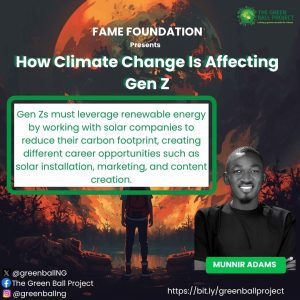
The discussion began with the reality that climate change is not experienced the same way everywhere. Munnir Adams explained that while some communities are dealing with flooding, others are facing desertification. These differences, he noted, influence how people understand and respond to climate issues. He also highlighted that climate action is creating new opportunities in areas such as solar energy, environmental communication, content creation, and meteorology, stressing the importance of making climate education practical and relatable.

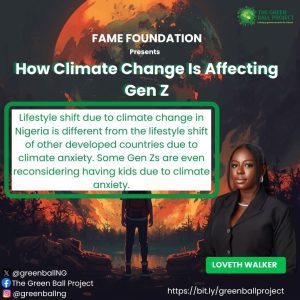
Loveth Walker focused on the emotional and social impact of climate change on young people. She described how many members of Gen Z are already shifting toward more sustainable lifestyles such as thrifting, reducing plastic use, and exploring renewable energy options. She also addressed the growing issue of climate anxiety, where concern about the future is influencing major life decisions. However, she emphasized that this anxiety is also becoming a driving force, pushing many young people into activism, volunteering, and climate education.

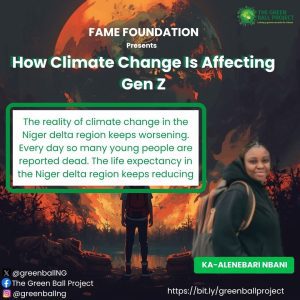
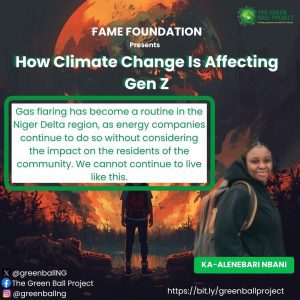
Ka Alenebari Nbani turned attention to the Niger Delta, where environmental damage remains severe. He explained how oil spills and gas flaring continue to pollute water sources, introducing harmful substances such as benzene into the environment. These conditions, he noted, have serious consequences for health, agriculture, fishing, and access to clean water. He called for stronger adoption of solar-powered solutions, reduced emissions, and safer environmental practices in affected communities.
By the end of the webinar, one message stood out clearly. Climate change is no longer a distant issue. It is already shaping how young people live, think, and plan their futures. For Gen Z, it is both a challenge and a call to action.