
Contact Us:
House 3, Gloriana Gardens Estate, NUT road, Sabon Lugbe, Abuja, Nigeria
Landmark: National Union of Teachers (NUT), Sabon Lugbe.
Tel: +2349070051404
Email: info@famefoundationwg.org
A Not-Profitable Organisation set up to formulate programmes through several initiatives to mentor, empower and advocate for women and girls.
FAME foundation was established to solicit, encourage and advance the social, emotional and economic wellbeing of women and girls as well as formulate programmes within the framework of national development plan with a view to enhancing the participation of women and advocate for gender parity in the society. FAME foundation firmly believe that the entire nation, businesses, communities and groups can benefit from the implementation of programs and policies that adopt the notion of women empowerment.
 November 6, 2025
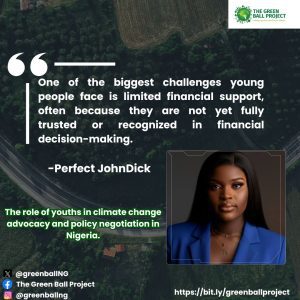
Green Ball Project, an initiative of FAME Foundation, organized its monthly webinar titled “The Role of Youths in Climate Change Advocacy and Policy Negotiation in Nigeria” on October 27, 2025.

The session, held via Microsoft Teams, brought together young Nigerians and climate advocates to discuss the contribution of youths to national climate efforts and their participation in policy development.
The webinar featured two speakers, Mr. Olumide Idowu, Executive Director, International Climate Change Development Initiative (ICCDI), and Ms. Perfect Johndick, Co-Creator, Rooted Rising Initiative.
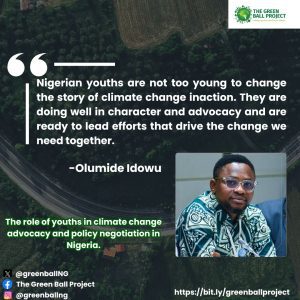
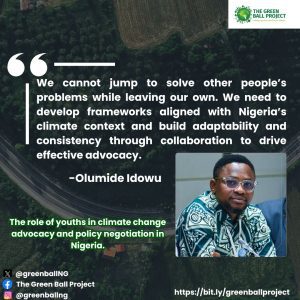
In his presentation, Mr. Olumide Idowu discussed the potential of Nigerian youths in advancing climate action and the barriers that limit their inclusion in policy negotiations. He highlighted the importance of capacity building, collaboration, and policy reforms to ensure that young people have a meaningful voice in environmental governance.
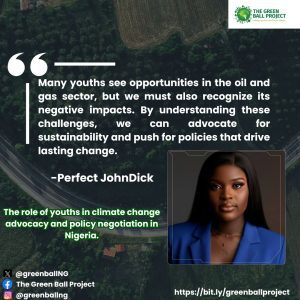
Ms. Perfect Johndick shared insights on youth-led climate initiatives in the Niger Delta region, drawing attention to the environmental challenges facing the area. She emphasized the need for transparency, accountability, and consistency in youth projects, noting that integrity remains essential for building trust and achieving long-term impact.
The webinar recorded over 38 participants, including students, climate advocates, and professionals. The discussion encouraged active engagement, with participants sharing ideas on community action, policy advocacy, and partnership opportunities.
Main points from the session included the recognition that Nigerian youths are capable of leading climate advocacy efforts, the need for greater inclusion of young people in policy discussions, the importance of starting initiatives at the community level, and the value of collaboration with government agencies, non-governmental organizations, and private actors.
The webinar achieved its purpose of raising awareness about the role of youths in climate change advocacy and policy negotiation in Nigeria. It provided participants with knowledge, motivation, and a clearer understanding of how to engage in climate action and contribute to environmental sustainability.