
Contact Us:
House 3, Gloriana Gardens Estate, NUT road, Sabon Lugbe, Abuja, Nigeria
Landmark: National Union of Teachers (NUT), Sabon Lugbe.
Tel: +2349070051404
Email: info@famefoundationwg.org

A Not-Profitable Organisation set up to formulate programmes through several initiatives to mentor, empower and advocate for women and girls.
FAME foundation was established to solicit, encourage and advance the social, emotional and economic wellbeing of women and girls as well as formulate programmes within the framework of national development plan with a view to enhancing the participation of women and advocate for gender parity in the society. FAME foundation firmly believe that the entire nation, businesses, communities and groups can benefit from the implementation of programs and policies that adopt the notion of women empowerment.
FAME Foundation Virtual Webinar | Wednesday, 29 July 2026 | 1:00 – 3:00 PM WAT
REPORT:
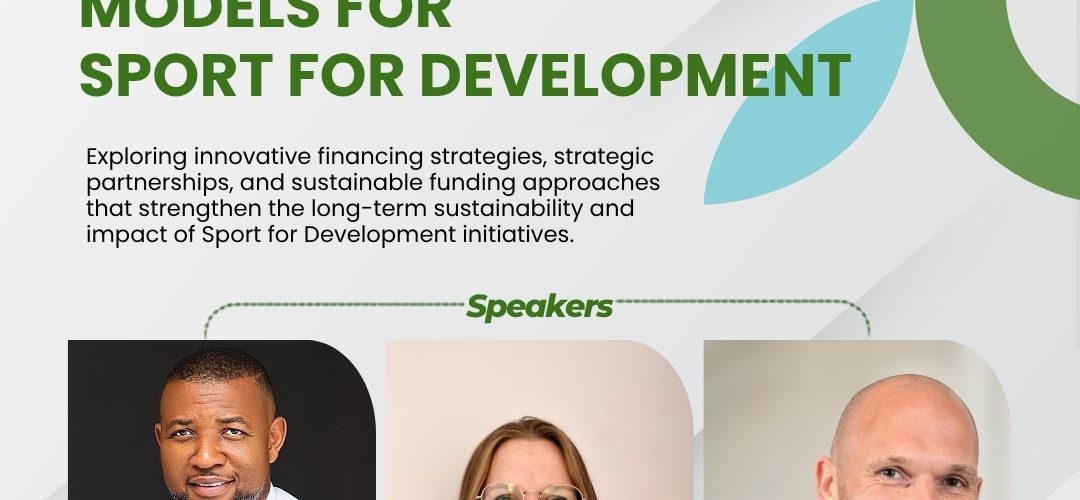
On Wednesday, 29 July 2026, FAME Foundation hosted a virtual webinar on Sustainable Financing Models for Sport for Development, bringing together leading experts from across the global Sport for Development sector. The webinar serves as a build-up towards the upcoming summit scheduled to happen on 20th October 2026, titled “Sports Diplomacy and Sustainable Financing Summit”. The session, moderated by Kemisola Ibitoye, Director of Programs at FAME Foundation, featured Shola Opaleye, Founder and CEO of CitySports Group; Keri McDonald, Capacity Building Lead at Remedy Sport; and David Given-Sjölander, Founder and CEO of Sport [Re]Imagined. The conversation centred on practical funding strategies, innovative partnerships, and sustainable financing approaches to help organisations strengthen their impact and build long-term resilience.
Key Insights from the Session:
ORGANISATIONAL READINESS COMES BEFORE FUNDING
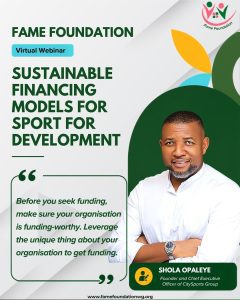
A recurring theme across the session was the importance of building a strong internal foundation before pursuing external funding. Shola Opaleye was direct on this point:
“The first thing you should do before attracting funding is to have a solid organisation. Before you seek funding, make sure your system or organisation is funding-worthy.”
Attracting funders requires more than a compelling pitch — it requires systems, structures, and a track record that inspire confidence. Opaleye reinforced this later in the session:
“For long-term funding to be guaranteed, long-term value has to first be built.” Funding, in his framing, is a consequence of credibility, not a substitute for it.
LEAD WITH OUTCOMES, NOT MECHANISMS
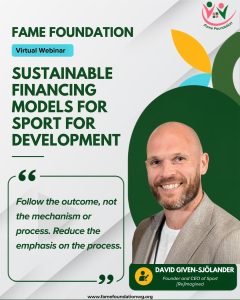
David Given-Sjölander challenged organisations to rethink how they communicate their work to potential funders:
“To attract sustainable funding, talk more about the outcomes you’re delivering and less about the mechanisms — reduce the emphasis from the manner in which you deliver the work to the outcome or the results of the work you are doing.”
Funders are ultimately interested in results and impact — shifting the narrative from process to outcomes makes a stronger and more compelling case for sustained investment.
SUSTAINABLE FUNDRAISING REQUIRES STRATEGY AND TIME
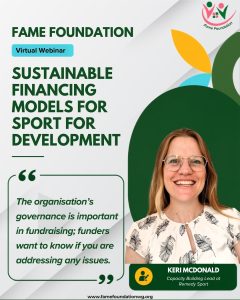
Keri McDonald offered a grounded perspective on the realities of fundraising, cautioning against the expectation of quick results:
“There’s no quick fix when it comes to fundraising. Sustainable fundraising takes time, energy, strategy, and intentionality, but it is worth the result if you are able to invest in fundraising readiness.”
She also highlighted a structural consideration that is often overlooked:
“Having a fundraising team, not just a single person” is one key strategy organisations should consider adopting. Building fundraising capacity as a team function, she argued, is essential for long-term sustainability.
THE TRUST PRINCIPLE
One of the session’s most practical frameworks was the TRUST principle, presented as a guide for organisations seeking to build sustainable funding relationships. The five pillars are Track Record, Resilience, Unique Value, Systems with reputable impact, and Trust. The final pillar was underscored as foundational — organisations will not attract funding from partners who do not trust them. The framework offers a useful lens for organisations to assess their own readiness and identify gaps before approaching funders.
FUNDRAISING STRATEGIES WORTH ADOPTING
The speakers collectively outlined several actionable strategies for organisations at various stages of their fundraising journey. David Given-Sjölander highlighted two in particular:
“Networking — build relationships with other people, other organisations” and “Lock in with your digital presence — let your work easily be found online.”
Keri McDonald complemented this by emphasising the need to build an internal fundraising team — a structural shift that distributes effort and increases the organisation’s capacity to pursue multiple funding opportunities simultaneously.
CONCLUSION
The webinar offered a practical, and deeply relevant conversation for organisations working at the intersection of sport and development. The key message across all three speakers was consistent — sustainable funding is not something that happens to organisations; it is something they build deliberately, over time, through trust, systems, outcomes, and strategy. FAME Foundation thanks all speakers, participants, and partners who joined the session and contributed to what was a rich and impactful exchange.