
Contact Us:
House 3, Gloriana Gardens Estate, NUT road, Sabon Lugbe, Abuja, Nigeria
Landmark: National Union of Teachers (NUT), Sabon Lugbe.
Tel: +2349070051404
Email: info@famefoundationwg.org
A Not-Profitable Organisation set up to formulate programmes through several initiatives to mentor, empower and advocate for women and girls.
FAME foundation was established to solicit, encourage and advance the social, emotional and economic wellbeing of women and girls as well as formulate programmes within the framework of national development plan with a view to enhancing the participation of women and advocate for gender parity in the society. FAME foundation firmly believe that the entire nation, businesses, communities and groups can benefit from the implementation of programs and policies that adopt the notion of women empowerment.
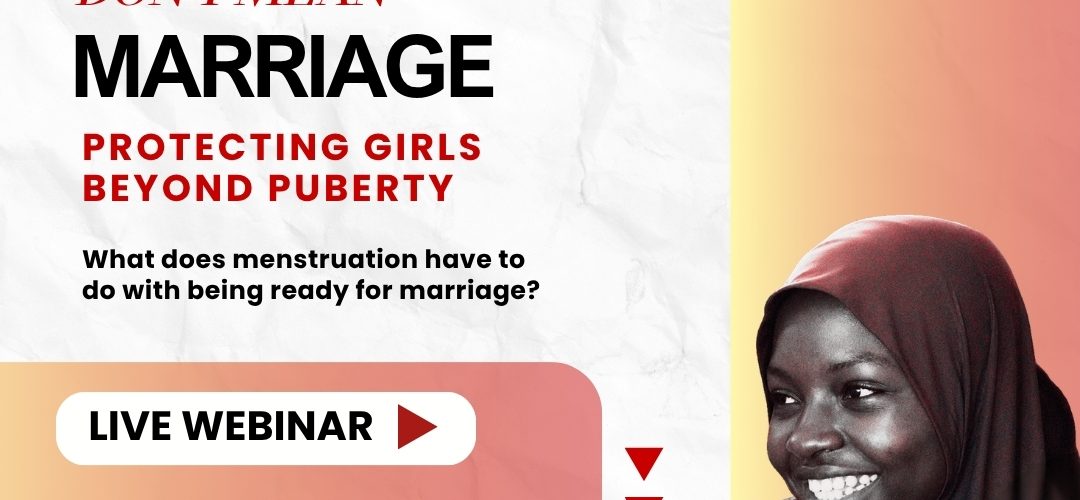
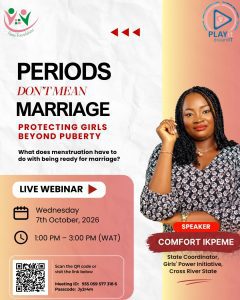
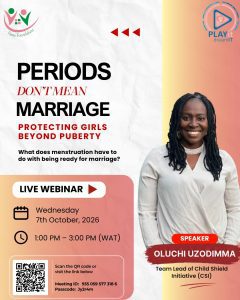
FAME Foundation organized a webinar titled “Periods Don’t Mean Marriage: Protecting Girls Beyond Puberty” on Wednesday, October 7, 2026. The session brought together advocates and development practitioners to examine misconceptions surrounding menstruation, the pressure placed on girls to marry after puberty, and the importance of protecting girls’ rights, education, health, and personal development.
The webinar emphasized that menstruation is a natural biological process and a stage of development, not an indication that a girl is ready for marriage or adult responsibilities. Discussions explored how families, communities, schools, and other stakeholders can support girls through puberty without exposing them to child marriage, exploitation, stigma, or interrupted education.
The central message of the webinar was: “A period is a part of growing up, not a call to grow up too soon.”
The webinar featured three speakers:
The session was moderated by Ms. Inyene Idiong, Program Manager, PLAY it DREAM it, FAME Foundation.
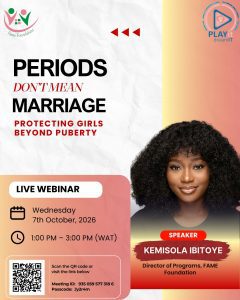
During the opening session, the moderator, Ms. Inyene Idiong, explained that the webinar was inspired by a social media post claiming that a girl becomes a woman when she experiences her first menstrual period. She challenged this belief and raised concerns about how menstruation is sometimes interpreted as a sign that a girl is ready for marriage.
She also discussed the pressure girls may face in some communities, where the onset of menstruation is celebrated in anticipation of marriage and the prospect of receiving a bride price.
The moderator introduced FAME Foundation and welcomed the speakers. Ms. Kemisola Ibitoye, Director of Programs at FAME Foundation, described the topic as timely and expressed her anticipation of learning from the other speakers.
The opening discussion established the need to challenge harmful cultural beliefs and distinguish biological development from emotional maturity, psychological readiness, and the ability to make informed decisions.
4.1 Menstruation Does Not Mean Readiness for Marriage
The moderator asked Ms. Oluchi Auchi Uzodimma why a girl’s first menstrual period is sometimes interpreted as an indication that she is ready for marriage.
Ms. Oluchi explained that a girl’s first period may be treated as a transition ceremony in some communities. However, the biological ability to become pregnant does not mean that a girl has the emotional maturity, understanding, or capacity required to make major life decisions.
She encouraged participants to consider whether a girl understands her body, emotions, sexuality, education, and future aspirations before assuming that she is ready for adult responsibilities. She also shared a personal experience of feeling frightened when she first menstruated and running to her brother for help.
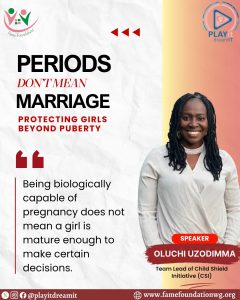
Her contribution emphasized the importance of preparing girls for puberty through accurate information, confidence-building, and personal development rather than subjecting them to social expectations of marriage.
The moderator added that some families anticipate menstruation because they associate it with marriage and the payment of bride price. She raised concerns about the physical and psychological harm girls may experience when married to significantly older men. She also expressed concern about reports of mass weddings in Kano State and the possibility of underage girls being involved.
The discussion further highlighted concerns that some communities may discourage girls’ education because education can increase their knowledge of their rights and their ability to challenge restrictive expectations. These concerns underscored the importance of protecting girls’ access to education and supporting their ability to make informed choices about their futures.
4.2 Biological Maturity Versus Psychological Readiness
The moderator asked Ms. Comfort Ikepeme to explain the difference between a girl becoming biologically capable of pregnancy and being ready for marriage.
Ms. Comfort explained that the distinction lies in psychological maturity, mindset, and understanding. She noted that a girl’s body continues to develop after her first period, making menstruation an unreliable measure of overall maturity.
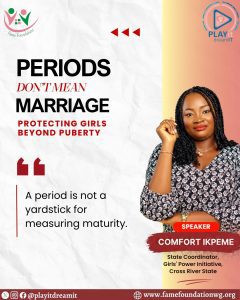
She further observed that even adults may not be psychologically prepared for marriage. Therefore, the onset of menstruation should never be used as a measure of whether a girl is ready for marriage.
Ms. Comfort also highlighted the need to provide girls with age-appropriate information about their bodies, menstrual health, and hygiene. Such education can help them understand the changes they experience, address confusion, and approach puberty with greater confidence.
Her contribution reinforced the need to separate biological development from the emotional, psychological, and social responsibilities associated with marriage.
4.3 Protection Begins at Home
Ms. Kemisola Ibitoye emphasized that protecting girls begins within the home. She stated that girls should be treated with dignity and should not be subjected to neglect, mistreatment, or harmful expectations because they have started menstruating.
She highlighted the importance of parental involvement, particularly the role of mothers and other trusted adults in providing accurate information and emotional support.
She encouraged parents and caregivers to consider whether girls have access to education, menstrual hygiene products, and trusted people with whom they can discuss their concerns. She also stressed the importance of paying attention to the pressures girls may face from relatives, peers, and the wider community.
Ms. Kemisola noted that menstruation is a normal biological process and should not be a source of shame. She discouraged misinformation and fear-based explanations, such as telling girls that any physical contact with a man will automatically result in pregnancy.
Her contribution emphasized the need for honest communication, appropriate reproductive health education, and supportive home environments where girls can ask questions without fear or embarrassment.
4.4 The Impact of Menstruation on Girls’ Identity and Opportunities
The moderator asked Ms. Oluchi what happens when menstruation changes how a girl is perceived by her family and community.
Ms. Oluchi explained that these perceptions can affect a girl’s identity and influence how she views her future. Instead of focusing on what she wants to become, a girl may begin to focus on what others expect her to be.
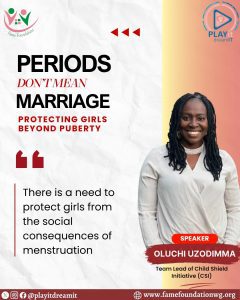
She noted that menstruation can become part of a wider pattern of risks when it is used to justify early marriage or restrict a girl’s opportunities. These risks may include sexual exploitation, school dropout, and stigmatization.
She warned against adults determining girls’ futures on their behalf and directing them towards marriage before they have had the opportunity to explore their interests, develop their abilities, and pursue their aspirations.
Her contribution stressed the importance of protecting girls not only from physical harm but also from social attitudes that limit their identity, independence, and future opportunities.
4.5 Supporting Girls Through Family and Community Engagement
When asked how families and communities could support girls through puberty without pressuring them into marriage, Ms. Comfort emphasized the need to educate people about the consequences of child marriage.
She highlighted the importance of proper care, encouragement, and support at home. She also advocated for educational programmes, skills acquisition, guidance, and opportunities that allow girls to develop their abilities and work towards their goals.
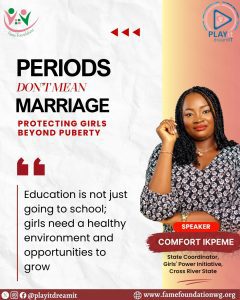
She stressed that girls need guidance about their changing bodies, personal boundaries, and private parts. Such support should equip them with the knowledge to understand their bodies and protect themselves.
The discussion demonstrated that protecting girls requires more than discouraging early marriage. It also involves providing the education, practical support, and opportunities they need to build independent and fulfilling futures.
4.6 The Role of School Sports, Mentorship, and Other Programmes
The moderator asked Ms. Kemisola how school sports, mentorship, and related programmes could support girls.
Ms. Kemisola explained that these initiatives create opportunities for girls to dream, discover their potential, and develop confidence. She described sports as a tool for empowerment when supported by a structured and purposeful curriculum, citing FAME Foundation’s initiative as an example.
She also emphasized the importance of mentorship, noting that girls benefit from having people who can guide, encourage, and support them as they navigate challenges and make decisions about their futures.
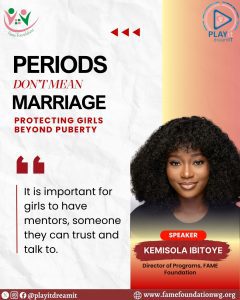
The moderator added that some schools lack adequate menstrual hygiene materials, causing girls to miss school during their periods. She highlighted the need for schools to provide menstrual hygiene kits and create environments that support girls’ continued participation in education throughout their menstrual cycles.
The discussion highlighted the value of combining education, mentorship, sports, and menstrual health support to improve girls’ confidence, participation, and opportunities.
4.7 Girls’ Rights, Puberty, and the Right to Dream
The moderator asked Ms. Oluchi what girls should be told about their rights and the support they should receive during puberty.
Ms. Oluchi emphasized that girls should understand that their bodies are changing, that they are growing, and that they have rights. She advocated for accurate information that enables girls to understand puberty and make informed decisions.
She also stressed that parents, teachers, and boys should be educated about girls’ rights and the importance of respecting them. Girls should feel safe reporting abuse and have access to trusted adults who will listen to and support them.
Ms. Oluchi reiterated that menstruation does not determine a girl’s worth or limit her ability to dream. Girls have potential and futures that extend beyond marriage, and they should be supported to remain in school, understand their bodies, and pursue their aspirations.
She encouraged positive communication around puberty, emphasizing that it should be presented as a normal stage of development rather than a signal that a girl must become a wife.
Her contribution reinforced the message that puberty does not mean adulthood and that menstruation should never be used to diminish a girl’s rights, ambitions, or future possibilities.
4.8 Education, Skills Development, and Opportunities for Growth
In response to a further question from the moderator, Ms. Comfort highlighted the importance of equipping girls with skills and support systems that help them navigate social pressure.
She explained that education should mean more than simply attending school. Girls need meaningful learning experiences, a healthy environment, and opportunities to develop their abilities and progress academically and personally.
She encouraged stakeholders to create conditions that allow girls to pursue higher levels of education and build futures based on their interests and capabilities.
Her contribution highlighted education as a protective factor that can expand girls’ choices and reduce their vulnerability to pressure towards early marriage.
4.9 Challenging Harmful Messages and Menstrual Stigma
During her final contribution, Ms. Kemisola emphasized the need to be careful about the messages communicated to girls concerning menstruation and marriage.
She stressed the importance of honesty, education, and advocacy for change. Menstruation should not be treated as a source of shame or used to justify expectations that girls should marry as soon as they reach puberty.
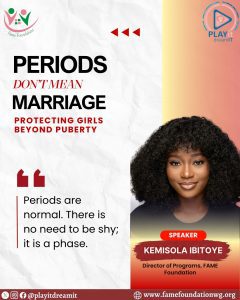
Her contribution called for a shift in attitudes and communication practices so that girls receive accurate information and are supported to understand their bodies without fear or stigma.
4.10 Children’s Rights, Consent, and Parental Guidance
The moderator raised questions about the definition of a child and how adults should respond when children express a desire to marry against their parents’ wishes.
She noted that peer pressure and the influence of friends may contribute to some girls wanting to marry early or considering leaving home when their families disagree. In response, Ms. Comfort referred to child rights law and discussed the limitations on children making certain major decisions.
She emphasized the responsibility of adults to provide guidance, encouragement, and information about the possible consequences of decisions children wish to make. She encouraged parents and caregivers to engage children in meaningful conversations, explain potential risks, and provide constructive alternatives rather than relying solely on punishment or rejection.
During this discussion, she stated: “The best time to bend an iron is when it is hot.”
The statement reinforced her view that guidance, education, and positive intervention are important during childhood and adolescence, when young people are developing their understanding of relationships, responsibility, and the future.
The discussion highlighted the importance of safeguarding children, providing age-appropriate guidance, and ensuring that decisions about marriage are not driven by misinformation, coercion, or peer pressure.
The moderator discussed several consequences associated with child marriage, including:
The discussion emphasized that the consequences of child marriage can extend beyond the marriage itself, affecting girls’ education, well-being, independence, and long-term opportunities.
The webinar highlighted the following key messages:
The webinar “Periods Don’t Mean Marriage: Protecting Girls Beyond Puberty” provided an opportunity to examine harmful assumptions that connect menstruation with readiness for marriage. Through the contributions of Ms. Oluchi Auchi Uzodimma, Ms. Comfort Ikepeme, and Ms. Kemisola Ibitoye, the session highlighted the importance of distinguishing biological development from emotional maturity and readiness for adult responsibilities.
The discussions emphasized that girls need accurate information about puberty, supportive families, safe schools, access to menstrual hygiene materials, mentorship, and opportunities for education and personal development. They also highlighted the risks associated with child marriage and the need to challenge social expectations that restrict girls’ choices and aspirations.
A central takeaway from the webinar was that protecting girls requires more than discouraging early marriage. It requires creating environments where girls are informed, respected, safe, educated, and supported to shape their own futures.
The message remains clear: a girl’s first period should be a reason to support her through a natural stage of development, not a reason to rush her into marriage.